MALSTROM AWARD Nominations for 2011

Five nominations were received for the 2011 Malstrom Award. Each is an excellent entry and, as always, nominees reflect only a small portion of the worthy projects done last year by our LOSCHO groups. Those nominated break new ground in research and interpretation of Snohomish County history. The order of the projects listed below is random. This year’s judge will be Eric Taylor, Heritage Lead for 4Culture of King County.  The award will be announced and presented on March 17th at the Heritage Day & Malstrom Luncheon.

~~~~~~~~~~~~~~~~~~~~

Project Name: Interpretive Displays at Heritage Park Museum. (Interpretive Museum Displays) Sponsor: Alderwood Manor Heritage Association.

Description: The group recreated rooms in the upper floor of the Wickers building where the Wicker’s family once lived upstairs when it was their Alderwood Mercantile (Wickers Store) The exhibit includes stories of the Wickers Building and other buildings in Heritage Park. Lynnwood is located in an area that was originally called Alderwood Manor. Alderwood Manor was a planned community built by the Puget Mill Company after they logged off more than 6,000 acres prior to the 1920s.  The project was a collaboration between AMHA, Sno-Isle Genealogical Society and the City of Lynnwood.

Project Name: Stuck In the Mud, The History of Warm Beach Washington by Penny Hutchison Buse. (a print publication) Sponsor:  Stanwood Area Historical Society

Stuck in the Mud - A History of Warm Beach

Description: Stuck in the Mud: The History of Warm Beach, Washington is the first and only history of Warm Beach and is a substantial contribution to Snohomish County and regional history covering the place’s geography, biology, early explorers, the Port Susan Logging Company, Standard Oil, the building of a small town, the colorful people who made it happen and much more. Penny has done decades of research but Warm Beach is clearly “her place” and she brings much of her personal experience to the work. The book is an excellent read: 363 pages in length and illustrated with black and white and color images, published in 2011 by Penny Hutchison Buse, Fairwinds Writings at mARiTime, printed by Snohomish Publishing Company. While the book itself is a treasure, Penny has taken no money for its sale and has instead offered it as a fundraiser to the Stanwood Area Historical Society and other heritage groups.


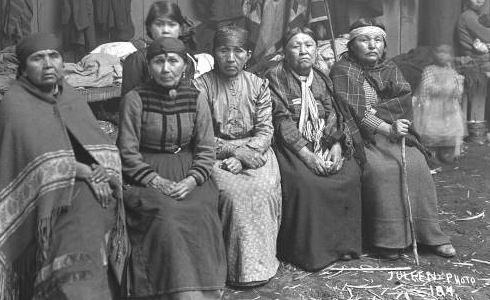
Project Name: Chirouse: The Reverend Father Eugene Casimir Chirouse, Pioneer in Oregon and Washington Territories by Betty Gaeng. (a print and online publication).    Nomination by Sno-Isle Genealogical Society.

Description: CHIROUSE tells the story of Father Eugene Casimir Chirouse, O.M.I, a Catholic missionary whose life journey took him from his home country of France to the newly developing Oregon Territory (what became eastern Washington), the Puget Sound region, Tulalip and finally British Columbia. He is best remembered for his work among the Coast Salish of the Puget Sound region, particularly 21 years at the Tulalip Reservation. In Betty’s research, she has uncovered and presented information previously unknown to readers. and offers this writing as both a printed book and online publication http://www.rootsweb.ancestry.com/~wasigs/chirouse.htm

Granite Falls Record (newspaper)Project Name: Converting Historic Newspapers into Research Assets. Sponsor: Granite Falls Historical Society. Fred Cruger, Project Director.

Description: Granite Falls Historical Society undertook a newspaper digitization project beginning in 2010 and completed in 2011. 10,000 pages of Granite Falls newspapers (1922-1970s) were converted into text-searchable electronic files, making it possible to easily retrieve mentions of a particular family, business, or topic, whether in news articles, social columns, editorials, or advertisements. The project was done through Small Town Newspapers and funded in part with two grants from the Snohomish County Heritage Preservation Commission, the remainder of the funds provided by Granite Falls Historical Society

Vietnam RememberedProject Name: Monroe 2011 Veterans Day Event and Exhibit. Sponsor: Monroe Historical Society. Project Manager Butch Ohlsen.

Project Description: This year local veteran Butch Ohlsen and the Monroe Historical Society held a special Veterans Day remembrance. The day also marked the opening of the exhibit “Vietnam Remembered: Veterans Stories” in the Monroe Historical Museum, curated by Ohlsen and Chris Bee . Publicity about the event and exhibit, produced by Historical Society member Tami Beaumont , brought a crowd of nearly 400 people who braved a miserable cold, windy, rainy afternoon for the hour-long ceremony, after which about 100 visitors crowded into the museum to see the new exhibit. Vets who had never talked about their service, even to family members, opened up with each other that afternoon. The exhibit brought to light items that soldiers carried home from Vietnam, most of which had been packed away and forgotten for 45 years. Those items were joined by memorabilia saved by the families. Oral histories document survivors’ stories. Notebooks containing photos and documents for each soldier rounded out the exhibit.


Hidden Treasures of our State’s Archives

Jerry Handfield, Washington State Archivist

Thursday evening May 26th, 2011
7 pm
Floyd Norgaard Cultural Center
27130 102nd Ave NW
Stanwood, WA  98292

Take advantage of this unique opportunity to meet Jerry Handfield, Washington State Archivist who will speak on the

“Hidden Treasures of our State’s Archives”. 

His talk will feature the unique public records preserved by the State Archives focusing on the Stanwood and Camano Island area. 

The Washington State Archives hold the public records that embody the history of the people, towns, counties, cities and public agencies of the State of Washington and Washington Territory (1853-1889). In some instances they are the only existing documentation of vital records (births, death etc.), property, people, governments, and organizations.  They include historical records on lands, plats and surveys, military service, naturalization, census, corporation records among many others.  They provide proof of dates and times of events, often revealing long forgotten family and community secrets and mysteries.

Washington State Digital Archives

Washington State Digital Archives

More and more of these records are being made accessible digitally on the State Archives website for use by researchers, genealogists, historians, the media and anyone who needs to official historical background of people, places, the evolution of our communities.
(http://www.digitalarchives.wa.gov/).  He will speak about the extent and development of this effort, privacy and public record disclosure controversies and the costs and savings of digitizing and management of unique treasures hidden in the gray archival boxes!

Contact:
Stanwood Area Historical Society
360-629-6110
info@sahs-fncc.org
www.sahs-fncc.org

Preservation and Conservation for Small Museums – Videos

Preservation Week 2011 has brought us many examples of how to save our treasures – both those help by families and by our community museums.   I’ve added a link to a Nebraska’s PBS website with several excellent, short, easily viewed videos on problems facing our small museums.  Note also the excellent articles written by experts to enhance those already available from the Library of Congress (see list below).

Our local history museums are our community attics and basements and need support in providing the best care they can for our artifacts, antiques, documents and photographs.  If you are a board member or volunteer of one of our local museums, please take the time to view these videos. They can help you recognize problems and plan for the future!

http://www.netnebraska.org/extras/treasures/

—-Karen
Contact the League by email ———  info at snocoheritage.org

Help to preserve our family and community histories !

Preservation Week April 24th – 30th – Help to preserve our family and community histories – Visit Your Local History Museum or Genealogical Society!

Our community and family photo collections and stories are very valuable and they are being lost to those who might some day appreciate them.  Therefore – this week we encourage you to think about how to celebrate your family and community history.  Some ways include:

—–Sit the family down for a quiet interview focusing on a member of your family. Let them remember life when they were young, the things they did for fun, how world events affected them, favorite stories and favorite rants. You’ll learn more than you think!  If you are a senior in your family, consider ways to share your own past and do identify your family photographs.

—–Consider hosting a neighborhood meeting to share life experiences. Those not born and raised in your community have a lot to offer and their stories will add to the most common American experience today, that of moving, arriving, beginning in a new place.

—–Support efforts to keep funding for historic preservation.

—–Visit or Volunteer at your Local Historical Society – keep our museums open, help with exhibits, programs or recordkeeping  –  Your Local Heritage Group Needs You !

There is a list of local heritage groups on the right side bar of our website – www.snocoheritage.org – each has many wonderful things to offer.  See Also Louise Lindgren’s wonderful discovery story of Index WA’s lost past!

For those of us involved in their family or community histories already – visit your neighboring group to listen and learn and learn and maybe collaborate.

For some important statistics on our local collections, click here!

The Importance of Preserving Family & Community Photographs !

The following story was originally published in the “Perspective on the Past” column of Snohomish County Senior Services newspaper, Senior Focus, the April-May 2011 edition.

Photos Leave a Lasting Impression of Life

By Louise Lindgren

c. 2011 All Rights Reserved

The small photo in an old black album riveted my attention. Yes, there were the two granite columns and the wooden cross piece, letting people know they were welcome in the town of Index. All was just as I had drawn it on a small scrap of paper under the direction of longtime Index resident Wes Smith, back in 1982. It was a rough pencil sketch from my imagination and his memory, for no such welcoming portal had been seen on the old road entering town since the 1920s.

Entryway to Index WA

Index Welcomes You

Until that remarkable album find in 2009 no one in our historical society had seen any image showing the long-ago abandoned main entry to the town. Wes had nothing, except in his memory, and there was no such photo to be found in the hundreds taken here by Lee Pickett, a commercial photographer whose collection was given to the University of Washington by his widow, Dorothy. She corroborated Wes’ memory on that day back in 1982 when I inexpertly drew that likeness. I had been looking for an original image ever since.

There are two remnants of the portal left. One pillar, quarried from the granite that dominates cliffs behind the town, sits on its matching block near the corner of 6th and Avenue A.  With its attached bronze plaque, the monument serves as a memorial to Index pioneer William Ulrich. One block, pillar missing, sits on its original site. Until the photo surfaced, few townspeople knew an entry portal existed when Avenue A was the main road into town.

The road entered at that western point having wound its way tortuously up through many turns – one evocatively named “The Devil’s Elbow” — from Gold Bar, over a long ridge that is now primarily state park land. Now named the Reiter Road, in the 1920s it was the state’s first official scenic highway, the “Cascade Highway,” which crossed Stevens Pass. It was fitting for the town to have a monumental structure to welcome all those cross-state travelers and fitting that three young ladies would choose to pose on those stones as they took a break after a grueling drive on that unpaved road.

Sometimes the most important pieces of information — images, drawings, documents, memorabilia and artifacts — come to a museum from far away, totally unexpected and long removed from the time they were first connected with the story of a community. These are the happy surprises – few and far between. When we began collecting the history of the town of Index in an organized way in 1982, already much had been lost.

People moved away in the 1930s, taking their family albums with them. Early Index residents died, having passed those albums, in many cases, to children who were born elsewhere, having no story connections to most of the images. Often scrapbooks were cut apart, with only recognizable people pictures saved – the rest discarded as trash because it was thought that no one would care.

That might have happened to this rare image of the town’s entry as well, had it not been for the foresight, responsibility, and caring of Ruby Egbert’s friend, Bob Morse. He inherited her memorabilia and could have taken a shortcut to its disposal by ignoring the fact that her album had images of Index, where she lived for a short time. The photo I had been hoping would appear for over 25 years could have been tossed.

After all, the primary story about Ruby was not the fact that she was a young person in Index, but that she earned fame as the woman who donated money to buy and preserve 75 acres with 6,000 feet of shoreline which became the Ruby E. Egbert Natural Area of Bottle Beach State Park at Grays Harbor.  After leaving Index, she had a career as a librarian with the Washington State Library in Olympia and was a dedicated bird watcher and world traveler. Although she did not live long enough to see that area’s dedication ceremony in July 2009, The Olympian newspaper praised her efforts as a benefactor to her beloved birding territory by the seashore.

When the writer decided to open the article about the dedication of that natural area with the sentence, “All of us leave an impression on this planet,” the intention was to honor Egbert for her great environmental gift. No one recognized at that time that her legacy would live on in the small town of Index, as the person who saved the photo and placed it in an album which would eventually make its way “back home” to the place where she lived and cavorted with her friends for a while by the entry to town.

How many more albums are out there, sitting in dusty corners of antique shops, or worse, moldering away under piles of garbage at a county dump? How many shoeboxes and scrapbooks hold pictures that could answer the questions of those who seek their community’s history? We historians honor not only those who took the time to make the images and save them for “someday,” but those, like Bob Morse, who recognize the importance of adding to the community memory by saving and sharing those open windows to the past.

Perhaps you have created such collections, or inherited them from relatives.  Suggestion: if your children show no interest right now, bet that they may in the future. Often people become interested in their own family history too late, in their forties or older, when they finally find the time. Often that’s too late – the photos have been discarded, or the family member who could add information to the image has passed on.

Go ahead, make copies of those pictures, adding words that will tell the story. Have faith that the time spent is worth it, and give photos and information not only to relatives, but to any historical groups that are appropriate. If you find an album in a second hand store and recognize the area where the photos were taken, you might find a grateful museum director who, as I, had been looking for just that information. In this seemingly small way, you too will have added to the impression you can’t help but leave on this planet.